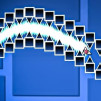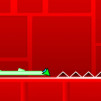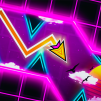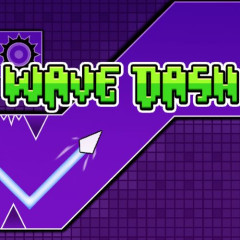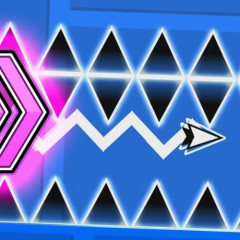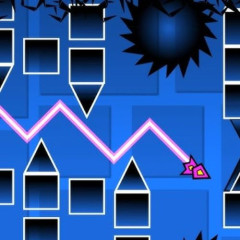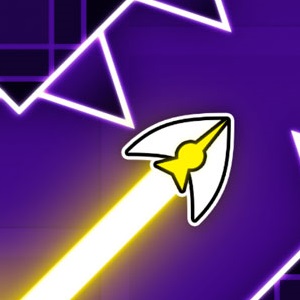
Think your wave control is good? Geometry Dash: Black Line tests your precision with deadly 4x speed sections and almost no room for mistakes.
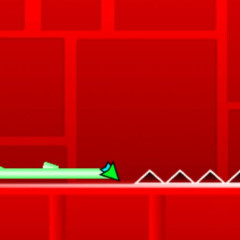
If you are stuck on this specific wave run, you know the exact spot. You enter the green portal, the screen shifts color, and you crash into the very first set of spikes before you can even process what went wrong.
The Problem: You’re staring right at your wave icon, trying to micro-manage every single movement. That works fine in easier levels like Noob in Geometry Dash, but at 4x speed, it's a death sentence. By the time a spike actually registers in your brain, you’ve already crashed. It feels like you’re clicking on time, but the game engine says otherwise - you’re just reacting to things after you've already passed them. You try to panic-correct on the next frame, but the speed just eats up your input window before your finger even moves.
The Fix: Force your eyes toward the right third of the screen. It feels incredibly uncomfortable at first because you lose that visual confirmation of where your icon is, but you have to trust your peripheral vision to handle the wave's positioning while your main focus scans for the upcoming gaps.
To get through this run, you have to stop trusting what your eyes are telling you and just memorize the actual layout rhythm. If you've played tougher custom maps or messed around with things like Geometry Jump 2, you already know how bad the hitboxes can get compared to the official main levels.
Here is exactly how the action game breaks down when you're moving that fast:
The visual assets in Black Line do not perfectly match their underlying collision data, which is exactly why you will feel like you died to "nothing" at times.
In Geometry Dash Full Version, these deaths usually feel easier to read because the obstacles look closer to their real hitboxes.
Entering the dark green 4x speed portal completely alters how your inputs translate to vertical movement.
Horizontal Velocity: The screen scrolls at four times the base rate, compressing the distance between your clicks.
Steeper Trajectory: Because horizontal speed increases while the wave's vertical velocity remains tied to frame timing, your angle of ascent and descent becomes sharp and aggressive. The window for micro-adjustments disappears; you cannot use long, sweeping clicks and must switch to rapid, short-amplitude tapping to maintain a straight line.
While players clear this level on 60Hz, using a 144Hz or 240Hz monitor significantly reduces input lag. At 4x speed, higher refresh rates give you more precise frame windows to execute the short-amplitude taps required for tight corridors.
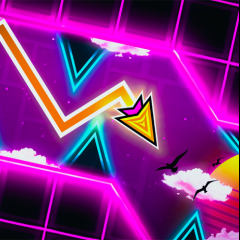
This is a common visual bug in the Geometry Dash engine caused by high-velocity transitions and object heavy optimization triggers within the custom level design. It does not affect your central hitbox, so you must rely entirely on the position of your icon rather than the trail.
Most players find mechanical keyboards (using the Spacebar or Up Arrow) or high-polling-rate gaming mice best for Black Line. The tactile feedback helps prevent the input overshoot that causes you to crash during sudden speed changes.