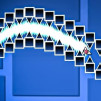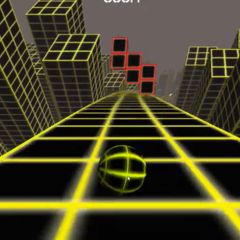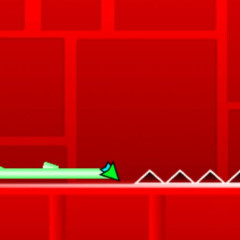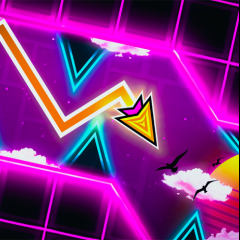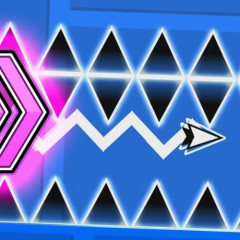
Have you ever felt your heart race in sync with every click on your screen? Don’t let the minimalist aesthetics of Geometry Wave Hero fool you, this is a high-stakes arena where the line between a legendary maneuver and a frustrating "Game Over" is measured in milliseconds. If you’re stuck in a frantic zigzag section or simply looking to shatter your friends' high scores, you’ve come to the right place. Get ready to turn your reflexes into pure rhythm and master the harshest physics in the geometry universe. Read on, or accept defeat at the hands of the spikes. The choice is yours!
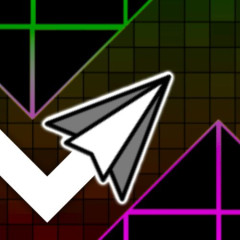
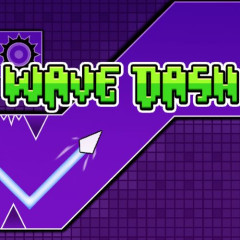
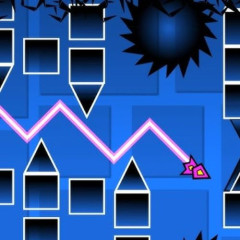
Unlike traditional platformers where movement feels floaty, Geometry Wave Hero is built entirely on Constant Momentum. Much like the precision required in the original Geometry Dash Lite, success here depends on understanding the diagonal pathing.
To survive the "Extreme" difficulty stages, you must move beyond basic clicking and master these pro-level maneuvers:
Micro-tapping is the art of keeping your wave in a nearly perfectly horizontal line through tight corridors. By using rapid, rhythmic taps instead of long holds, you create tiny oscillations. This technique is essential for navigating the narrowest gaps in Space Waves.
In sections where the ceiling and floor fluctuate rapidly, you need Geometry Dash Spam skills. High-frequency clicking allows you to change direction instantly, preventing your wave from gaining too much vertical height and crashing into obstacles.
Don’t stare directly at your wave icon. Instead, anchor your vision about 20% ahead of your current position on the screen. This allows your brain to process upcoming obstacles and prepare the rhythmic input before the wave reaches the danger zone.
Achieving a 3-star rating requires more than just survival; it requires efficiency.
This is usually due to "input latency" or late reaction. Since the wave travels diagonally, its upward momentum carries it forward-and-up. Try releasing 0.1 seconds earlier than you think you should.
While the mechanics are similar, Geometry Wave Hero focuses exclusively on the wave mode, making it a specialized challenge for those who want to master that specific skill set.
To boost your clicking speed in Geometry Wave Hero, focus on using your wrist rather than your whole arm to minimize fatigue and increase "taps per second" (TPS). Additionally, ensure you are using a high-polling rate mouse or a low-latency touch screen, as the tight corridors in Geometry Wave Hero leave zero room for input lag during high-frequency spamming.